EE Labels: Innovation and Sustainability in Label Production
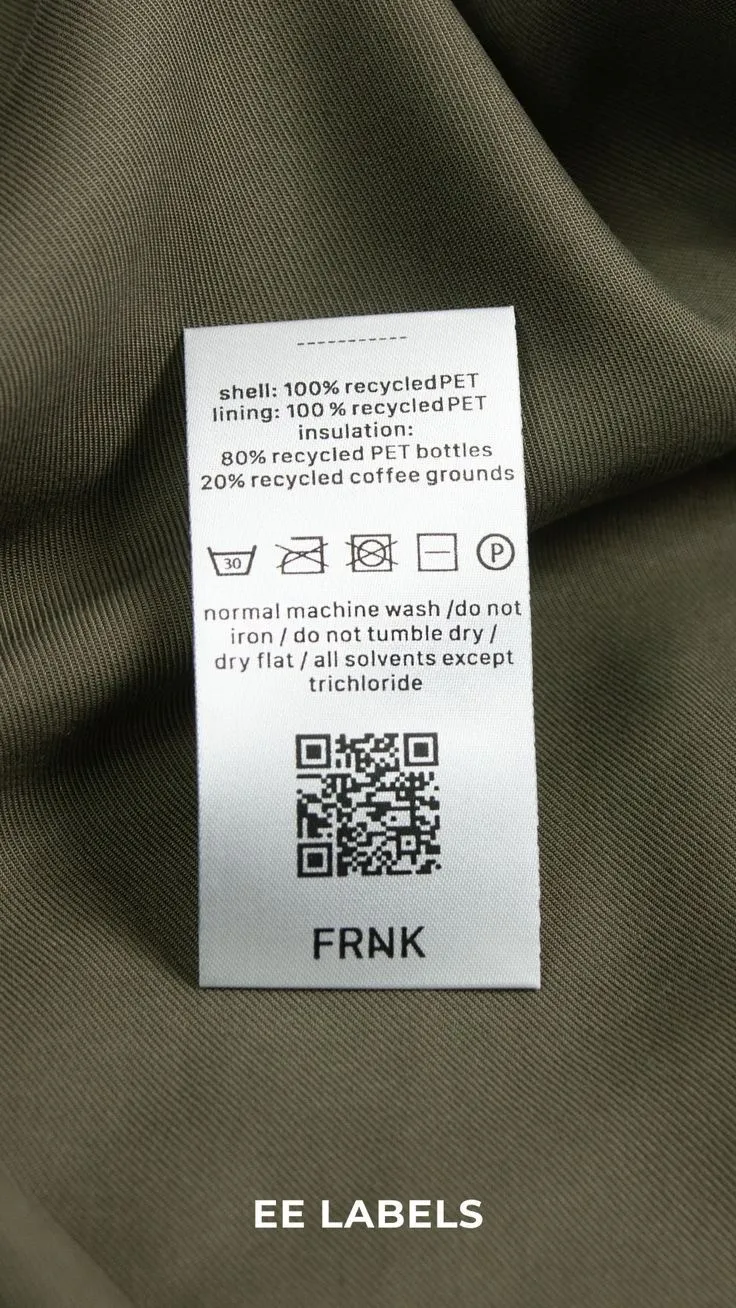
Pick up any garment in your wardrobe right now. Turn it inside out. Find the label. That small, often scratchy rectangle sewn into the back seam or side. Read it. Care instructions, fibre content, country of origin, maybe a brand logo. Now ask yourself: when was the last time you thought about where that label came from? What it is made of? Whether the ink printed on it is toxic? I certainly never did. Not until a class at HoGent introduced me to EE Labels and quietly turned everything I thought I knew about sustainable fashion completely inside out.
The Invisible Detail That Says Everything
We talk endlessly about fabrics. Organic cotton. Recycled polyester. Tencel. Deadstock. And those conversations matter. They really do. But here is something that stopped me cold: a garment can be made from the most ethically sourced fabric on earth, sewn in a fair-wage factory, shipped carbon-neutral. And then have a label made from virgin polyester, printed with solvent-based inks, attached with a plastic tag gun. The irony is almost painful. It is like writing a love letter to the planet on paper made from deforestation. The details betray the intention.
EE Labels understood this contradiction long before most of the industry did. They specialise in producing woven and printed labels using recycled yarns, water-based inks, and certified sustainable materials. Their labels are not an afterthought glued onto a finished product. They are designed with the same care, the same ethical scrutiny, as the garment itself. When I first held one of their recycled woven labels in class, I was struck by the quality. It was soft, detailed, beautiful. There was no compromise. Just proof that doing things right does not mean doing them worse.
A label is the last thing a consumer sees before they buy. And the first thing they feel against their skin. It deserves more than an afterthought.
Truth Sewn Into the Seam
What I find most powerful about EE Labels is what their work represents philosophically. A label is, at its core, a piece of communication. It tells the wearer who made this, what it is made of, how to care for it. It is the garment's voice. And if that voice is printed on unsustainable material with harmful chemicals, then the message is a contradiction. The brand says one thing; the label whispers another. EE Labels closes that gap. They make it possible for a brand's values to be consistent all the way down to the last centimetre of thread.
As a fashion design student, this changed how I think about my own work. I used to sketch a design and think about fabric, silhouette, colour. Now I think about the entire garment. Including the parts nobody sees. The care label. The hang tag. The size strip. These are not invisible details. They are statements. Choosing a sustainable label is not a marketing gimmick. It is integrity. It is saying: I cared about this garment enough to make sure every single piece of it aligns with what I believe. And honestly? That feels more radical than any fabric choice I could make.
I have started a small habit since that class. Every time I buy a new piece of clothing, I check the label. Really check it. Not just for the fibre content, but for the label itself. What is it made of? Does it feel considered, or does it feel like an afterthought? It is a tiny act, barely takes a few seconds. But it has changed the way I see fashion entirely. Because sustainability is not a headline. It is not a fabric swatch or a marketing campaign. It is a commitment that lives in the smallest details. In the parts most people never look at. And companies like EE Labels are proving that those details can carry the weight of an entire philosophy.