AI in the Fashion Industry: How Artificial Intelligence is Shaping the Future
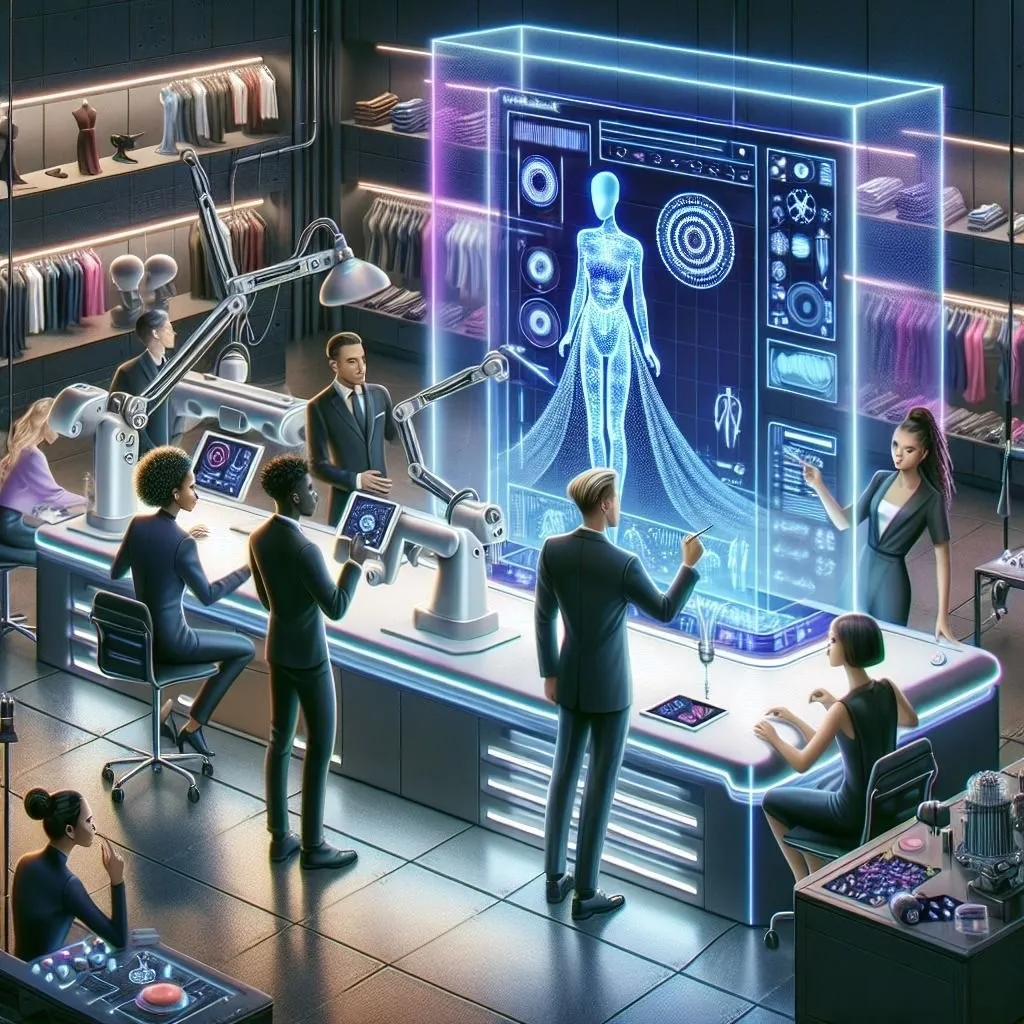
Let me tell you about the moment I felt genuinely unsettled by artificial intelligence. I was sitting at my desk late one evening, experimenting with an AI image generator for the first time. I typed in a few words. Something like "deconstructed blazer, raw silk, Belgian minimalism." And within seconds, the screen filled with designs that looked like they could have come from a graduate collection. Beautiful. Polished. Soulless. I closed my laptop and sat in the dark for a while, wondering if everything I was working toward had just become obsolete.
The Seduction and the Fear
I am not going to pretend I was not scared. Every fashion student I know has had that moment. The cold realisation that a machine can now do in seconds what takes us weeks. AI can generate colour palettes, predict trends, create textile patterns, simulate draping on virtual bodies. It is staggeringly fast and often staggeringly good. And when you are a student still learning to get your seams straight, that speed can feel like a threat aimed directly at your future.
But here is what I have come to understand after months of experimenting, reading, and talking to professors at HoGent: AI is brilliant at generating options. It can give you a thousand variations of a collar shape before your coffee gets cold. What it cannot do is choose. It cannot feel the weight of a fabric between its fingers and know, in its gut, that this is the one. It cannot draw on a childhood memory of watching its grandmother sew to infuse a garment with emotional meaning. It cannot be haunted by an idea.
AI is the most powerful collaborator a designer has ever had. But a collaborator is not a replacement, and the soul of fashion will always be human.
Where I Have Found the Balance
Slowly, cautiously, I have started integrating AI into my own workflow. Not as a crutch, but as a conversation partner. I use it to explore directions I might not have considered. To generate mood boards when I feel stuck. To quickly visualise how a silhouette might look before I commit to cutting fabric. It has made me faster, yes. But more importantly, it has made me more intentional about the choices that are uniquely mine.
The handwork still matters. The imperfect stitch that tells you a human was here. The slight asymmetry that gives a garment life. The hours spent draping muslin on a mannequin, adjusting by millimetres, trusting your eye over any algorithm. These things are not inefficiencies to be optimised away. They are the entire point.
I no longer sit in the dark worrying about AI. Instead, I am learning to use it the way a painter uses a new pigment. With curiosity, with respect, and with the clear understanding that the tool does not make the art. The artist does. And that is something no algorithm will ever change.