How PLM Is Transforming the Fashion Industry
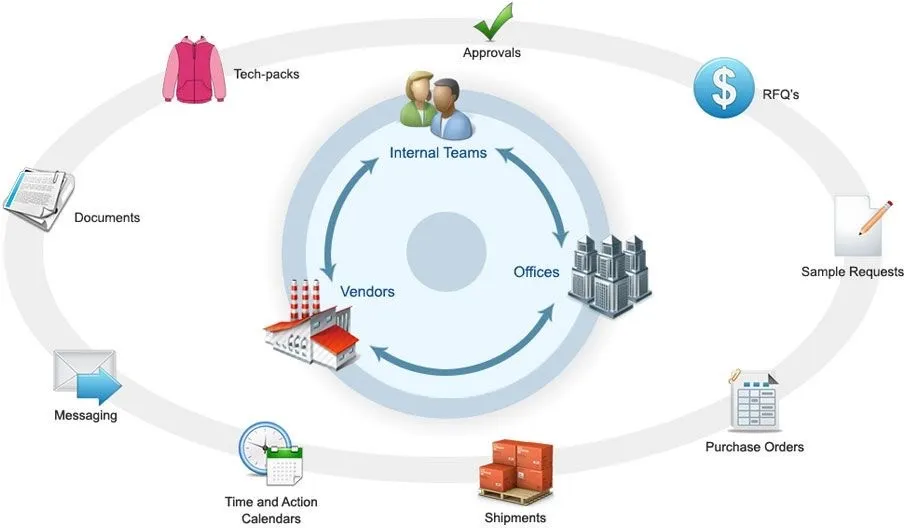
I will be honest. When our professor first wrote "PLM" on the whiteboard during a technology lecture at HoGent, my mind was already halfway to my sketchbook. Product Lifecycle Management. It sounded like something from a business school, not a fashion atelier. But then she started showing us what actually happens behind the scenes when a garment goes from a designer's sketch to a rail in a store. The spreadsheets, the email chains, the physical samples shipped back and forth across continents, the miscommunications that lead to wasted fabric and missed deadlines. And suddenly I was sitting up straight. Because PLM is not just software. It is the answer to a mess I did not even know existed.
From Chaos to Clarity
Here is what shocked me most: the traditional fashion production process is astonishingly chaotic. A designer in Antwerp sketches a collection. A pattern maker in Porto interprets those sketches. A fabric supplier in Istanbul sends swatches. A manufacturer in Bangladesh produces samples. And all of these people are communicating through a patchwork of emails, PDFs, WhatsApp messages, and. I am not making this up. Sometimes actual fax machines. Every time a detail gets lost in translation, it costs time, money, and materials. A single wrong colourway can mean thousands of metres of wasted fabric.
PLM systems change everything by putting every single piece of information. Sketches, tech packs, material specs, supplier details, production timelines. Into one shared digital platform. Everyone involved can see the same information in real time. When the designer changes a button, the manufacturer knows instantly. When the supplier flags a fabric delay, the entire timeline adjusts. It sounds simple, almost obvious. But for an industry built on fragmented communication and creative egos, it is genuinely revolutionary.
The most sustainable garment is not the one made from organic cotton. It is the one that never had to be made twice because someone misread an email.
Why This Matters for Designers Like Me
I used to think technology was the opposite of creativity. That real fashion happened at the cutting table, not the computer screen. But learning about PLM has completely changed that view. Digital prototyping tools within these systems can create 3D renderings of a garment before a single piece of fabric is cut. That means fewer physical samples. Fewer resources consumed just to test whether a silhouette works. One of our professors mentioned that some brands have reduced their sample production by up to sixty percent using PLM. Sixty percent. Think about the fabric, the shipping, the labour that saves.
For someone like me who cares deeply about sustainability, this is not just impressive. It is essential. We spend so much energy talking about organic materials and ethical production, which matters enormously. But we rarely talk about the waste hidden in the process itself. The overproduction that happens because demand forecasting was off. The deadstock that piles up because communication broke down. PLM addresses the invisible waste, the kind that never makes it into a sustainability report but silently undermines every good intention.
I never thought a piece of software would excite me as much as a beautiful fabric. But here I am, genuinely thrilled about data centralisation and real-time collaboration. Because I have realised something important: the future of fashion is not just about what we design. It is about how we bring those designs to life. And if a smarter, more connected process means less waste, fewer mistakes, and more space for creativity? Then PLM is not the enemy of craft. It is its greatest ally. The atelier and the algorithm, working together. That is the kind of fashion industry I want to build.